“No pay to win” is not a magic label. A game can have a generous free track and still sell power in PvP. Another can have aggressive gacha but no competitive mode where that power decides the match.
The useful question is: what does spending change, and where does it matter? This comparison uses published game systems and clearly avoids absolute “fair game” claims. No long-term free-player or spending test has been performed by HudPicks.
Quick verdict
| Player priority | Better fit on paper | Why | Main warning |
|---|---|---|---|
| Skill-focused PvE action | Zenless Zone Zero | Single-player action focus; no competitive PvP listed | Gacha characters and gear |
| Story, co-op and factory building | Arknights: Endfield | PvE-led structure in the current listing | Gacha and battle-pass monetization |
| Collecting without twitch PvP | RAID: Shadow Legends | Turn-based collection and PvE depth | Shards, events and grind pressure |
| Alliance strategy | Star Trek Fleet Command | Long-term strategy loop | Spending accelerates growth and PvP progression |
| Competitive space MMO | Project Entropy | Large PvE/PvP sandbox | Purchases and upgrades matter in competition |
Short answer: if you mainly want PvE and can ignore collection pressure, ZZZ and Endfield are the safer structural fits. If you want alliance wars or territory competition, assume spending may matter and judge the game as a strategy MMO—not as a level playing field.
What counts as pay to win?
For this guide, “pay to win” means paying for a meaningful advantage in a competitive outcome: stronger units, faster power growth, extra attempts, premium progression or access to power that free players cannot reasonably match.
Scan for these signals before installing:
- PvP advantage: can purchased characters, gear or upgrades influence ranked or territory outcomes?
- Progression acceleration: does money reduce timers, energy limits or upgrade bottlenecks?
- Power gacha: are paid pulls tied to combat strength rather than cosmetics?
- Competitive pressure: are you repeatedly matched against spenders or alliance leaders?
- Free-player route: can active players earn the same gameplay power over time?
Cosmetic purchases are not automatically pay to win. A battle pass is not automatically pay to win either. The impact depends on what it unlocks and whether the important competition is PvP, co-op or solo PvE.
Lower competitive pressure: PvE-first games
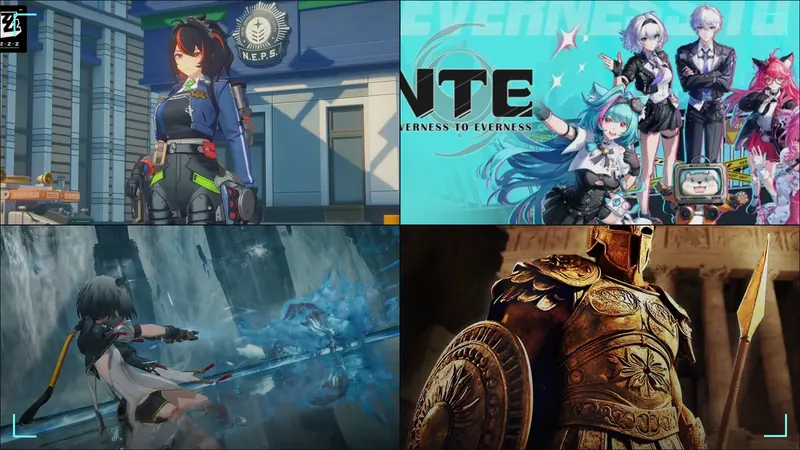
Zenless Zone Zero
Why it may fit: the current Steam listing describes ZZZ as a single-player action RPG with in-game purchases; it does not present a competitive PvP ladder as the core loop. That lowers direct wallet-versus-wallet pressure.
What spending changes: gacha pulls can give access to new Agents and gear faster. Daily energy and limited banners create collector pressure even when the game is PvE.
Who should skip it: players who dislike random pulls, limited banners or time-gated farming. ZZZ is also not a lightweight download for an old integrated-graphics PC.
Read our Zenless Zone Zero guide for the PC requirements and gacha context.
Arknights: Endfield
Why it may fit: Endfield’s public description focuses on real-time squad combat, exploration and factory building. Its current Steam listing identifies in-game purchases, but the game is not presented as a competitive PvP ladder.
What spending changes: new operators, pulls and progression systems can shorten the route to a preferred squad. That is still a meaningful advantage in collection and PvE efficiency, even without ranked PvP.
Who should skip it: players who want a small install or a no-gacha RPG. The official PC requirements also list 16GB RAM and substantial storage plus extraction headroom.
Collection games: less PvP pressure, more grind pressure
RAID: Shadow Legends
Why it may fit: RAID is built around turn-based teams, campaigns, dungeons, clans and collection. A player can spend much of the early game in PvE without treating every session as a wallet race.
What spending changes: shards, bundles, energy and upgrade resources can accelerate roster growth. RAID also includes PvP modes, so stronger collections and faster gearing can matter competitively.
Who should skip it: players who want transparent progression, no duplicate pulls or no daily-event pressure. The free route is playable on paper, but the economy keeps presenting shortcuts.
The gacha guide explains pull, pity and banner vocabulary before you spend.
Alliance games: assume spending matters more
Star Trek Fleet Command
STFC is a long-term space strategy game about starbases, ships, officers, events and alliances. Free players can build, explore and participate in the wider galaxy.
Purchases can accelerate construction, research, ship progression and event readiness. That matters more when alliances contest territory or PvP objectives than when you follow the early story.
Skip it if you want quick, skill-only matches or dislike timers. A free account can be active, but “free to play” does not mean “equal power at equal time.”
Project Entropy
Project Entropy offers sci-fi civilization building, hero fleets, PvE, PvP, alliances and seasonal content. That is a strong match for persistent MMO strategy players.
The official Steam listing confirms in-app purchases alongside PvP, hero fleets, upgrades and season-based play. That combination is enough to classify the game as competitive-spending risk, without inventing a dollar-to-power calculation.
Skip it if you want a calm solo strategy game or a clean separation between cosmetics and power. Read recent reviews before committing time or money. See the Project Entropy guide for its hardware floor and review context.
NTE and Sea of Conquest
NTE is an open-world action RPG with co-op and gacha. Its structure creates less direct PvP pressure than a territory-war MMO, but paid characters can still change roster access and progression speed. Treat it as a PvE/co-op gacha game, not a no-monetization game.
Sea of Conquest is a pirate strategy title with online play, crews, ships and guild progression. Its current HudPicks record describes purchases that speed up ship and hero upgrades. That matters more in guild competition, so casual players may find it manageable while competitive captains should expect pressure.
Five questions before you install
- Is the game mainly PvE, co-op or competitive PvP?
- Does money buy cosmetics, convenience, characters, gear or direct power?
- Can free players earn the same gameplay items, and how long does that take?
- Are energy, timers, banners or upgrade materials built around repeated spending prompts?
- Will you enjoy the core loop if you never buy a pull, pass or bundle?
If the answer to the last question is no, the game is not a good free-to-play fit for your budget—even if its marketing says “free.”
FAQ
What is the fairest free-to-play game?
There is no universal winner. A PvE-first game can reduce direct pay-to-win pressure, but it may still sell characters, pulls or convenience.
Are gacha games always pay to win?
No. Gacha can sell characters in a primarily solo or co-op game, where spending affects collection and efficiency more than a direct PvP result. It can still be expensive or psychologically pressuring.
Can free players compete in alliance games?
Often, but it depends on activity, alliance culture, server age and spending pressure. Free players may contribute meaningfully while still being slower or weaker than spenders.
Is a battle pass pay to win?
Only if it sells meaningful gameplay power or a large progression advantage. A cosmetic-only pass is different from one containing exclusive combat upgrades.
How do I avoid overspending?
Set a monthly limit before opening the shop, never chase a lost 50/50 or limited pull, and stop when the purchase is about recovering progress rather than enjoying the game.
Bottom line
For the lowest direct PvP pressure, start with a PvE-led game such as ZZZ or Endfield—but accept the gacha economy. For RAID, decide whether you enjoy the collection loop enough to ignore shortcuts. For STFC, Sea of Conquest and Project Entropy, treat alliance competition and spending acceleration as part of the product.
The honest recommendation is not “this game is completely free of pay to win.” It is: choose the monetization pressure you can live with before you invest your time, progress or money.
Editorial note: this article uses “based on published systems” language and does not claim a verified long-term free-player outcome. Affiliate CTAs, if added later, require clear disclosure and rel="sponsored". AdSense is not active.